
Bud Farm: Idle Tycoon
LDRLY GamesSimulation
4.727.51K Reviews
- Version
- 1.29.1
- Installs
- 5.00M
- Age Rating
- Mature 17+
Screenshots




Our Review of Bud Farm: Idle Tycoon
 Analysis by Appyee
I approached Bud Farm: Idle Tycoon as a relaxed simulation game rather than a fast action title. Its central idea is simple: build a cannabis-growing business, improve the operation, and keep production moving while you check in and make decisions. That setup gives the game an immediately understandable loop, but the real question is whether the steady stream of upgrades feels rewarding or turns into pressure to spend.
After spending time with it, I found a game that is easy to pick up and surprisingly good at making short sessions feel useful. It is also a game I would recommend with a clear condition: you need to be comfortable with idle progression and a mature theme. If you want a detailed management simulator with deep economic controls, this is probably too light. If you like tapping, upgrading, and returning later to collect progress, it has a much better chance of fitting your routine.
How the growing-business loop feels in practice
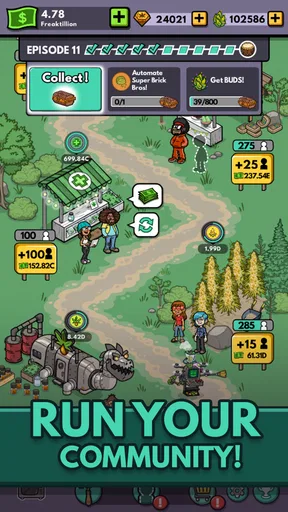
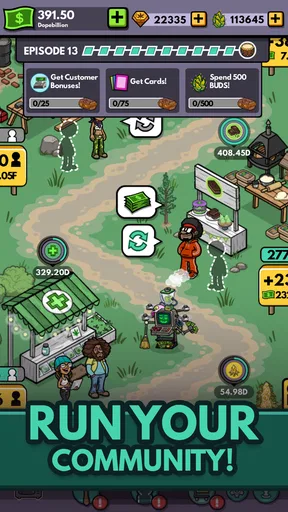
The game comes from LDRLY Games and sits firmly in the simulation category, although it plays more casually than a traditional business-management simulator. The appeal is not in controlling every tiny part of a farm. Instead, I focused on building momentum: tap through the available actions, improve the operation, and use the resulting growth to reach the next upgrade.
That structure works especially well on a phone because it does not demand a long uninterrupted session. I could open it while waiting for a coffee, make a few improvements, and close it without feeling that I had abandoned a complicated plan. Later, returning to see what had accumulated gave each visit a small sense of purpose.
The idle format also changes how I judge progress. In a conventional simulation, I expect to be constantly solving problems. Here, the satisfaction comes from arranging the next improvement and watching the operation become more productive over time. The game is at its best when I treat it as a collection of brief check-ins rather than a title that deserves my entire evening.
Why the first sessions are approachable
The basic premise does much of the teaching for the game. Growing plants, expanding a business, and upgrading production are familiar ideas, so I did not need a long explanation before understanding what I should do. That matters because idle games can become confusing when several currencies, menus, and timers appear at once.
My most useful early habit was to avoid spending immediately just because an upgrade was available. I first looked at what the improvement changed and whether it would help the part of the operation I was actively using. In a game built around incremental gains, a small decision repeated many times can matter more than a flashy purchase made too early.
I also found it helpful to separate “progress now” from “progress later.” Some actions made the current session feel faster, while others seemed more valuable for keeping the farm moving between visits. That distinction is easy to miss if I simply tap the most obvious button every time it lights up.
What makes the idle rhythm satisfying
The strongest part of the design is the feeling of continuity. I could make an upgrade, leave the game, and return with a reason to continue. That rhythm suits people who enjoy watching a small operation grow without having to micromanage every moment.
A realistic use case is a player who has a few minutes during a commute, lunch break, or before bed. I would open the game, collect what was ready, check the cheapest meaningful improvement, and leave. That routine is more comfortable here than in a game that punishes a missed session with a long list of urgent tasks.
There is a trade-off, though. The same simplicity that makes the game accessible can make later decisions feel less dramatic. If you need constant surprises, complex logistics, or a large amount of direct control, the loop may begin to feel repetitive. The game asks whether you enjoy gradual accumulation, not whether you can master a difficult system.
Three habits that improve the experience
First, I would keep a mental target for each session. Rather than tapping without a plan, I chose one improvement to work toward and treated smaller actions as steps toward it. This made the farm feel more like a business I was shaping instead of a screen full of buttons.
Second, I would resist judging an upgrade only by its immediate visual effect. Idle games often reward consistency more than spectacle. An improvement that supports repeated production can be more useful to my routine than one that merely feels exciting in the moment.
Third, I would use the game as a background activity, not as a replacement for a full strategy game. That expectation prevents disappointment. Its value comes from fitting around my day, and trying to force it into a deeper management experience makes its limitations more obvious.
Spending, pressure, and whether the progress feels fair
The game is free to download, which makes it easy to try before deciding whether the loop suits you. It includes in-app purchases ranging from $0.99 to $199.99 per item. That is the most important spending context for a new player: the entry cost is zero, but the available purchase range includes both small optional transactions and a very expensive top end.
I would not recommend treating the largest purchase as a normal part of the game’s cost. For me, the sensible approach is to play without buying anything at first, learn how quickly the regular progression feels, and then decide whether a small convenience is genuinely worth it. If the game only becomes enjoyable after spending, that is useful information about the fit, not a reason to keep escalating the budget.
The idle structure naturally creates moments of temptation. When an upgrade is close but not quite affordable, a paid shortcut can look attractive. I found that the best way to avoid pressure was to close the game and return later rather than make a decision while impatient. Since the core appeal is gradual growth, waiting is part of the intended rhythm.
Parents and shared-device users should also pay attention to the mature rating of 17+. The theme is adult-oriented, and I would not treat this as a general-audience farming game just because the controls are simple. The combination of mature subject matter and optional purchases makes it better suited to adults who can set their own spending boundaries.
Is paying necessary?
I would begin as a free player. That gives me a clearer sense of whether the basic loop is enjoyable before money changes the pace. A small purchase may make sense for someone who already likes the game and wants convenience, but I would not buy simply to overcome impatience during an ordinary session.
The purchase range deserves a deliberate response rather than an automatic judgment. The presence of expensive items does not by itself prove that free progress is impossible, and it also does not guarantee that the free route will always feel comfortable. My practical recommendation is to decide on a personal limit before playing, then keep that limit separate from the in-game urge to reach the next upgrade.
For players who dislike any game with optional spending, this may not be the right choice even if the free opening is enjoyable. There are other simulation games with a clearer one-time purchase model, and those are better for anyone who wants to remove monetization decisions from the experience entirely.
Competitive fairness and the solo-player question
I would judge this game primarily as a personal progression experience. The important fairness question is whether I can enjoy building the farm without feeling that another player’s spending determines my success. I would not choose it as a competitive game where rankings or direct contests are the main reason to play.
That distinction matters because idle progression is inherently vulnerable to unequal pacing. A player willing to spend heavily can move through upgrades faster than someone who waits. If your enjoyment depends on everyone advancing at the same rate, the purchase range will be uncomfortable. If you are mainly building your own farm and comparing today’s progress with yesterday’s, the issue is less central.
My advice is to decide what “winning” means before starting. If winning means creating a satisfying routine and improving the operation over time, the game can work without turning every delay into a problem. If winning means being ahead of spenders, I would skip it and choose a simulation with no purchase-driven acceleration.
What I would check before committing money
I would pay attention to how often the game interrupts normal progression with an offer and whether those offers feel like useful choices or obstacles placed in front of ordinary play. I would also watch how much progress comes from simply returning later compared with actively tapping for a session. Those observations tell me more about fairness than the existence of a shop alone.
I would also make sure the game is suitable for the device and account I plan to use. It supports Android 7.0 or later, so owners of older Android devices should check that requirement before trying to install it. The current version is 1.29.1, which is useful when checking whether the installed build is up to date.
One practical tip is to avoid making a purchase during the first burst of enthusiasm. Give the free loop enough time to show its normal pace. That makes it easier to distinguish a genuine preference for convenience from the temporary excitement of unlocking something new.
Who should play it, and who should look elsewhere?
I think the best audience is an adult player who likes casual business simulations, enjoys incremental upgrades, and wants something that can be checked in short bursts. The cannabis-farm theme is not a minor decoration; it shapes the identity of the game. Anyone uncomfortable with that subject should choose a conventional farming or tycoon title instead.
It is also a good match for people who like visible routines. I enjoyed having a simple reason to return: collect progress, improve the operation, and set up the next step. That can be satisfying after a busy day when I want a game with direction but not a demanding story or reflex challenge.
I would skip it if you need rich production chains, detailed staff management, realistic market simulation, or a campaign with a strong narrative. The game’s charm comes from accessibility and repetition, not from presenting a complicated model of running a real company.
I would also be cautious if you are easily drawn into spending to remove waiting. The free-to-play structure and purchase range make self-control part of the experience. A player who prefers fixed costs, transparent progression, and no temptation to accelerate should look at premium simulation games instead.
How it compares with familiar alternatives
Compared with a traditional farming simulator, this game is less concerned with land planning, crop variety, and hands-on chores. Its focus is the upward curve of a growing operation. That makes it faster to understand and easier to play in short sessions, but it offers less room for players who want to design every part of a farm.
Compared with a standard tycoon game, it is more relaxed and more idle-driven. I spent less time balancing a complex economy and more time deciding which improvement would keep the loop moving. A deeper tycoon title is the better choice for someone who enjoys spreadsheets, supply chains, and difficult financial trade-offs.
Compared with other idle games, the cannabis theme gives it a more distinctive personality than a generic restaurant, factory, or fantasy production line. The underlying pleasure is familiar, though: return, collect, upgrade, and repeat. If you already know that this loop loses its appeal after several sessions, the theme alone may not be enough to change your mind.
Questions I would answer before downloading
Can I play without paying? Yes, the game is free to download, and I would start that way. The smarter question is whether the free pace feels enjoyable to you. Spend only after you understand the ordinary rhythm and have decided that a convenience is worth your own limit.
Is it suitable for children? I would say no. The mature 17+ rating and adult cannabis theme make it an adult game, even though the controls are approachable. It should not be selected as a harmless substitute for a child-friendly farming title.
Does it require long sessions? Not in the way a story game or competitive action game does. Its idle format is designed around returning to the operation, so short check-ins are a natural way to play. The trade-off is that the experience may feel slow if you want constant activity.
Will it satisfy a serious management fan? Probably only if that player enjoys a simplified, incremental version of business growth. I would choose a more detailed tycoon simulator for deep planning, because this game prioritizes convenience over complex control.
Is it worth trying? For an adult who likes idle simulation and wants a free experiment, yes. The game has a clear identity, a manageable learning curve, and a routine that fits spare moments. I would simply approach it with a spending boundary and realistic expectations about depth.
My trust verdict after playing
The game earns my trust as a casual idle simulator when I judge it for what it is: a light business-growth experience with a mature cannabis theme. Its strong rating of 4.7 from around 199 thousand ratings and more than 5 million installs suggest that the format has found a substantial audience, but those figures do not replace personal fit. I cared more about whether the loop remained comfortable without rushing into purchases.
My final recommendation is cautious but positive. I would suggest trying it free, playing through the early routine, and deciding whether the farm feels rewarding before spending. I would not recommend it to children, players seeking realism, or anyone who wants a completely monetization-free simulation. For adults who enjoy incremental progress and can treat optional purchases as genuinely optional, the best way to enjoy Bud Farm is to control the pace instead of letting the next upgrade control you.
That is where the game works for me. It turns a few spare minutes into a small management ritual, gives the farm a recognizable personality, and avoids demanding constant attention. Its limits are just as clear: repetition, a lighter strategic layer, and the possibility that purchase offers can affect how the pace feels. With those trade-offs understood, I would keep it installed as an occasional check-in game rather than make it my main simulation.
Verdict
Strengths of Bud Farm: Idle Tycoon
- Simple idle mechanics make progress easy to follow.
- Frequent upgrades give the farm a satisfying sense of growth.
- Colorful visuals and playful animations suit casual sessions.
- Offline earnings help maintain progress between visits.
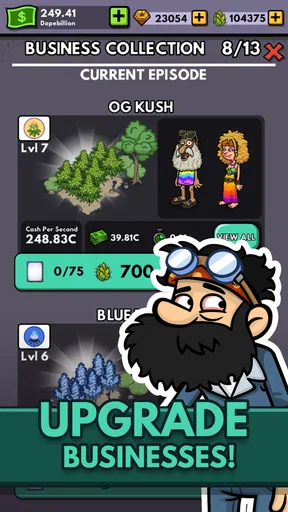
- Multiple production areas add variety beyond the first crop.
Limitations of Bud Farm: Idle Tycoon
- Progress slows noticeably when upgrade costs begin to rise.
- Some boosts and resources are strongly tied to rewarded ads.
- The core gameplay can feel repetitive after extended sessions.
- Limited strategic depth may disappoint experienced tycoon players.
- Battery use can increase during longer, animation-heavy play sessions.
Other Releases by LDRLY Games
View All
Cheech and Chong Bud Farm
Simulation4.7
Similar Picks in This Category
View All
Truckers of Europe 3
Wanda Software4.3

Town Building Life Simulator
XGame Global4.2

Fidget Toys Trading・Pop It 3D
Freeplay Inc4.7

Sculpt People
CrazyLabs LTD4.4

Scary Teacher 3D
Z & K Games4.2

Hair Tattoo: Barber Shop Game
CASUAL AZUR GAMES4.3
Frequently Asked Questions
What is Bud Farm: Idle Tycoon about?
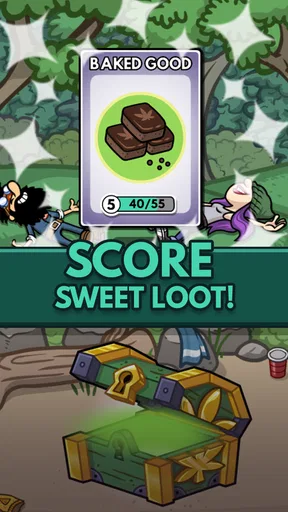
Bud Farm: Idle Tycoon is a casual management game where you build and expand a cannabis-themed farm. You grow different plants, process products, upgrade facilities, hire helpers, and earn money while you are away from the game. The focus is on idle progression, simple business decisions, and gradually turning a small operation into a larger virtual empire.
Is Bud Farm: Idle Tycoon free to download and play?
Yes, Bud Farm: Idle Tycoon is generally free to download and play on supported mobile devices. However, it includes optional in-app purchases that can provide premium currency, boosts, special bundles, or faster progress. You can enjoy the main gameplay without paying, although progress may feel slower later on if you choose not to use purchases or watch available advertisements.
Does Bud Farm: Idle Tycoon require an internet connection?
The game may allow some basic progress while offline, especially for collecting earnings generated by your businesses, but an internet connection is commonly needed for advertisements, cloud features, updates, events, and in-app purchases. Offline behavior can vary by device and version, so players should not assume that every feature will work without Wi-Fi or mobile data.
Are there advertisements and in-app purchases in the game?
Yes, Bud Farm: Idle Tycoon uses both advertisements and optional in-app purchases as part of its free-to-play model. Watching ads may help you receive bonuses, increase earnings, or speed up certain activities, while purchases can provide premium resources and convenience. Before downloading, parents and users should review device purchase settings to avoid accidental spending.
Is Bud Farm: Idle Tycoon suitable for children?
Bud Farm: Idle Tycoon has colorful graphics and straightforward idle-management mechanics, but its theme is centered on cannabis cultivation and related products. Because of that subject matter, it may not be appropriate for young children, even though the gameplay itself is relatively simple. Parents should check the official age rating, store description, advertising content, and local regulations before allowing access.
Play our best games!


